Logo design moodboard: research without imitation
Build a logo design moodboard around visual mechanisms, context and useful constraints. Includes a worked research example and a sketch handoff checklist.
Direct answer
A logo design moodboard gathers references for the tone and visual mechanisms of a proposed mark before sketching. Include typography, composition, contrast and subject matter, then label what you want to learn from each reference. Use the board to set constraints for original exploration, rather than choosing an existing logo to reproduce.
What belongs on a logo design moodboard?
A logo design moodboard includes the brand purpose, audience context and references for the intended tone. Typography, lettering, geometric relationships, objects and patterns can all contribute. Existing logos help explain the category, but should not fill the board. A reference that teaches balance or contrast can be more useful than another finished mark you like.
Milanote's logo guide starts with a direction and existing brand material, then gathers imagery, color and written notes before asking for feedback.[1]
The worksheet here concentrates on the handoff into sketching. For each reference, extract an observable mechanism and write a constraint that leaves room for a different form. Keep the original source so a designer can distinguish the observation from your interpretation.
Translate each reference into a mechanism
Describe how a reference works before describing how much you like it. Look at the relationship between solid and empty areas, repeated shapes, letter spacing, stroke weight and overall silhouette. Then write which relationship is worth exploring for this project. Avoid keeping a distinctive arrangement merely because you can change its color or rotate it.
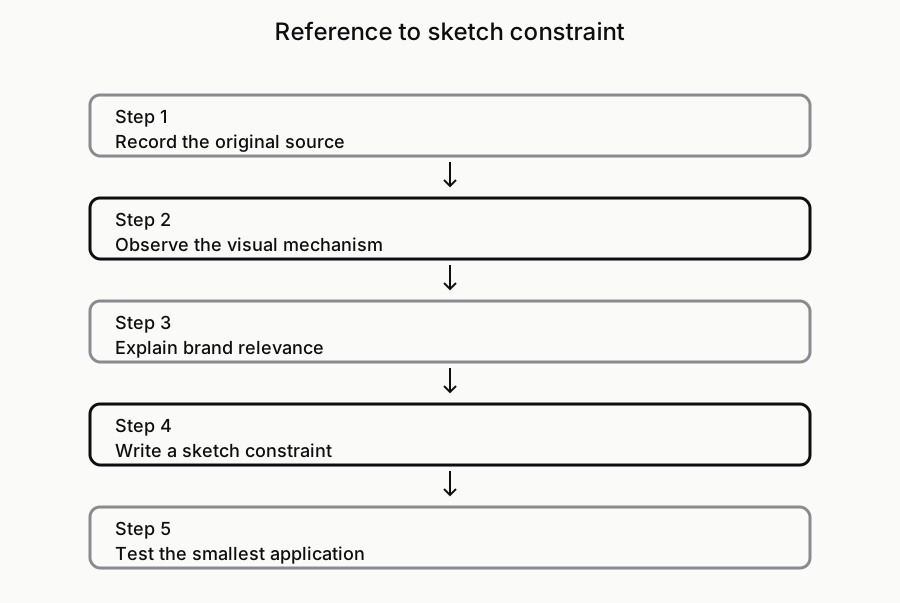
Imagine a hypothetical neighborhood bakery that wants a dependable, unhurried identity. A woven basket could suggest repeated rhythm; a hand-painted shop sign could suggest uneven letter spacing; a simple stamp could suggest a compact silhouette. None is a proposed final logo. The sketch instruction might be 'explore a compact wordmark with a steady baseline and restrained irregularity.' The diagram shows how observation becomes a sketch constraint.
- Reference and source: Where did this example come from?
- Observed mechanism: What relationship gives it its character?
- Project relevance: Why does that relationship fit this brand?
- Constraint for sketching: What should the designer explore?
- Form to leave behind: Which distinctive detail belongs to this reference?
Keep category research beside expressive research
Category research explains what people already encounter in the market. Expressive research explores a direction that might fit this particular brand. Keep them in separate groups. If every reference is a direct competitor's logo, familiar solutions can begin to look inevitable. References from lettering, materials or unrelated visual systems can offer a wider range of mechanisms to study.
For the bakery, a category group might record common uses of bread symbols and scripts. The expressive group might investigate stamp-like density, generous counters or the texture of hand lettering. Write which conventions you want to retain for clarity and which you want to challenge. Research approval is separate from approval of the finished mark.
Test the direction in the smallest real application
Choose application tests before judging sketches. A mark intended for a small label, an avatar and a shop sign has to survive different scales and surroundings. Put those contexts in the brief. The moodboard can communicate a direction, but it cannot prove a finished logo's readability or recognition. Those questions require checking the actual proposed design.
For the bakery example, start with a plain black mark on a small bag label and a narrow shop fascia. If fine details disappear or the name becomes hard to read, revisit the drawing rather than adding more references. Keep color exploration separate long enough to understand the silhouette. Record the test conditions so later reviews compare the same application instead of changing the question.
Hand the designer a brief that leaves room to draw
The handoff should name the brand need, the selected mechanisms, the constraints and the application tests. Include source links and a short list of approaches to avoid. It should not prescribe a composition assembled from fragments of existing marks. A useful brief tells the designer what the work needs to accomplish while leaving the form open to exploration.
For this hypothetical bakery, the brief could ask for a readable wordmark with a compact silhouette and gentle irregularity in the lettering. It could exclude bread icons and elaborate scripts, and ask the designer to check the small label and fascia. Keep abandoned directions in the library with their reasoning so they do not silently return in later feedback.
Keep source records separate from the finished identity
Keep your research collection, sketch brief and approved logo as separate records. Explore Sesavu for the reference-library workflow and check its documentation for current features. The board is not a logo generator, a trademark search or an asset license. Use the source-provenance guide to retain the context of research material, then handle final identity approval as its own step.[2][3]
Questions designers ask
Do I need finished logos on a logo moodboard?
You can include some to understand the category and discuss tone. Also gather type, objects, lettering and compositional references. Label the mechanism each contributes so the board supports exploration rather than selecting a mark to imitate.
Does a moodboard establish that a logo is original or available to use?
No. A moodboard records research and a proposed direction. It does not establish the originality or availability of the finished mark. Review the actual design and handle any required rights or trademark checks separately.
Sources checked
- Milanote's logo moodboard process — Milanote
- Explore Sesavu — Sesavu
- Sesavu documentation — Sesavu